
Colorful Cannas for Ponds and Water Features
Updated: Dec 16, 2025
Cannas are colorful, tall and impressive plants that command attention! Cannas are loaded with luscious long, tapered foliage that gives your pond a tropical look. Leaves may be striped or solid colored in hues of green or burgundy. The vibrant flowers appear on tall spikes above the foliage in summer through fall. They range in color from creamy yellow to orange, pink to red and bi-color blossoms resembling either gladiolas with large over-lapping petals or plumeria-types with more delicate, narrow petals.
Genus name comes from the Greek word kanna meaning "reed"
There are two kinds of Cannas- True Water and Water-Tolerant varieties. True Water Cannas grow well in wet areas in the garden or in ponds with water over their crowns. The other types of Cannas are water-tolerant terrestrial plants that can adapt to shallow pond areas (Bengal Tiger, Intrigue) as well as wet sites in the garden.
True water Cannas are species Canna like C. glauca that has blue green foliage and the Florida Canna C. flaccida and others that have been heavily studied for its medicinal uses C. indica. The Longwood Canna varieties are hybrids of C. flaccida and have been very popular for decades used as reliable hybrid cannas for ponds.
Aquatic cannas that are tolerant of shallow water are often crosses between Canna glauca and other species. While they can grow in moist soil, they are particularly well-suited for water features.
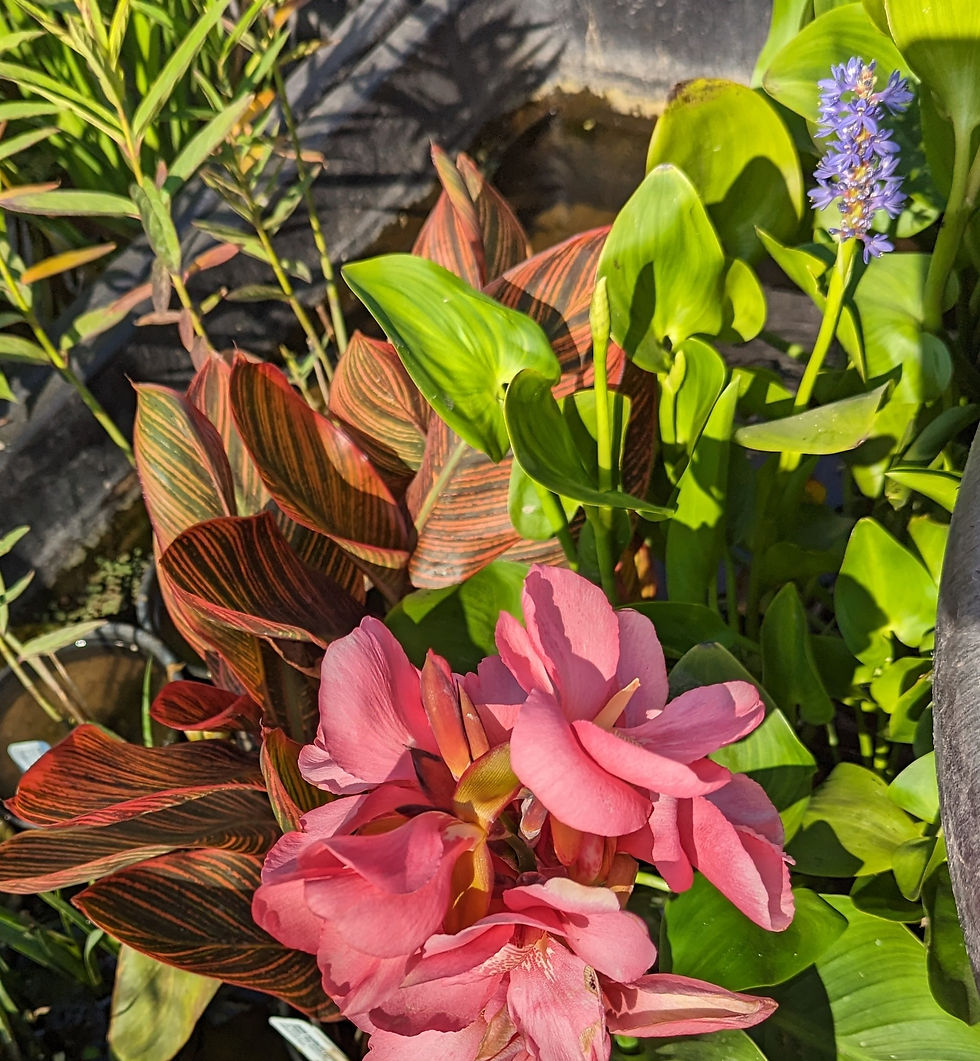
If you get addicted to Cannas, there is no need to worry, there are plenty of varieties to choose from that can grow in your ponds, bogs and container water gardens!

Caring for Cannas
Plant Cannas in up to 6-10” of water, make sure there are several inches of water over the crown especially during winter months. Space them 1.5-2’ or more if planted directly into the pond shelf to allow them room to spread. They can also be planted in pots with holes with aquatic soil &/or rocks. They like full sun to part shade and bloom mid-late summer through fall. Dwarf varieties can be planted a bit shallower in 3”-5” below the water surface as they are shorter and don’t require as much anchoring stability as the larger varieties do.

Cannas may also need to be fertilized for optimal blooming during the growing season if you do not have fish (fish waste acts as a fertilizer for plants). Only use fertilizers that are specifically labeled for pond plants, they usually come in a tablet or granular form that can be inserted into the root zone area. Repot or divide cannas when needed or every 2-3 years (more or less, depending upon how fast it grows) during the growing season or around May or June. Avoid dividing your canna too late in the season as it will need a few weeks in warmer water for the roots to callus.
Cannas are typically winter hardy in Zones 7-10, they can be lifted and stored indoors in colder areas. In the late fall after it is done for the season, cut your Canna down to a few inches above the water surface. Avoid cutting it below the water surface as it can cause it to drown, then to rot.
Learn more about pond plants- take one of my classes or read my pond plants manual- Phenomenal Pond Plants

Comments